

Ngā Uri o Ngai Tāwhiri -
Waikanae Awa Tipuna
Restoration Project (WATER)

Leading from the Land -
Project Grant
Project Outline
The Waikane awa is an important place within Turanga Gisborne for Ngai Tāwhiri hapu and Rongowhakaata iwi. It has been significantly altered from its true form being used as the Gisborne landfill, discharge from industry and earthworks affecting its mauri and ecosystem over the last century.
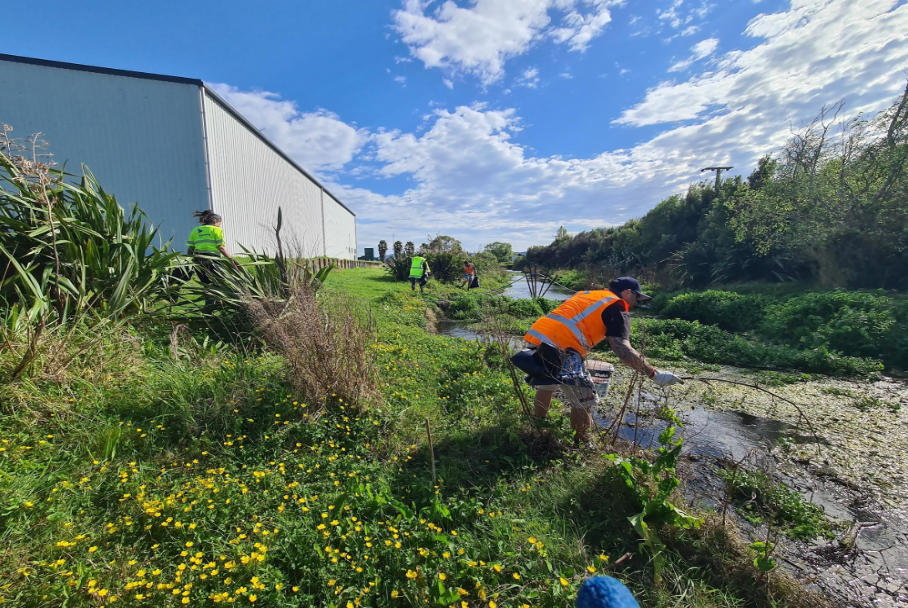
Ngā Uri o Ngāi Tāwhiri (NUoNT) received funding from LFTL to develop a hapū-led Waikanae Awa Restoration Plan focused on restoring the mauri of the Waikanae Awa through mātauranga Māori, wānanga, and collaborative planning. This project seeks to restore the mauri, mana, and wairua of our awa through the revitalisation and practical integration of Ngai Tāwhiri mātauranga into local restoration planning. The aim is to weave cultural knowledge, environmental science, and community collaboration into sustainable, intergenerational outcomes for both people and the awa.
The plan emphasises intergenerational stewardship and culturally grounded environmental restoration, including developing responses to local environmental challenges, trialling and evaluating restoration methods, and strengthening collaboration between whānau, hapū, and community partners. It promotes sustainable practices and intergenerational knowledge transfer including: improving fish passage, restore mahinga kai areas, and create meaningful learning and leadership opportunities for rangatahi and tamariki.
Phase 1 Research and Identification – Identify six examples of Ngai Tāwhiri mātauranga relevant to environmental guardianship (kaitiakitanga).
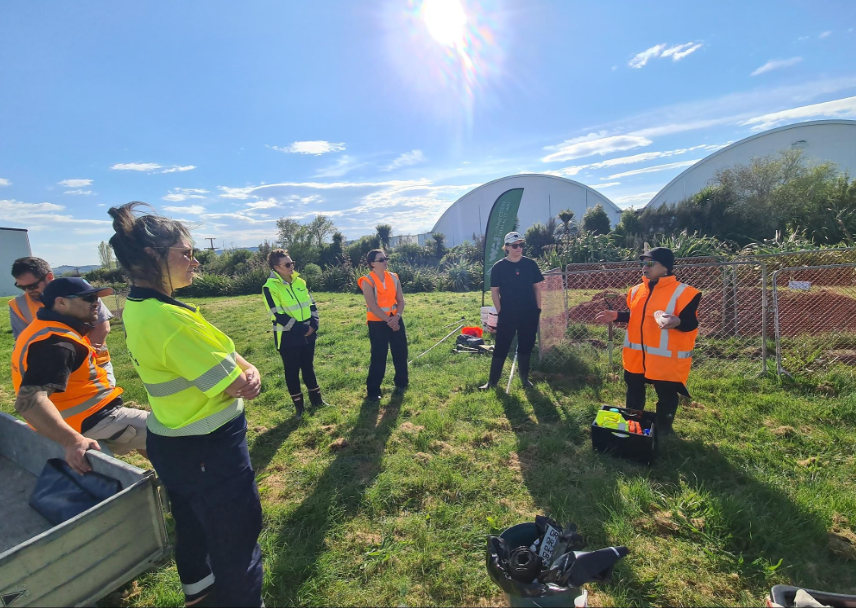
Phase 2 Knowledge sharing - Whānau, Hapu and Community Wānanga. Workshops with hapū, industry, and community members to prioritise and integrate mātauranga insights into the Waikanae Awa Tipuna Restoration Plan.
Project Report - Executive Summary
Led by Ngā Uri o Ngāi Tāwhiri, the project directly addressed the severe ecological decline of the Waikanae awa tīpuna and Tūranganui estuary—focusing on the kanae (grey mullet) as a vital bioindicator of overall catchment health.
By introducing Sir Mason Durie’s Interface Approach, the project identifies an integrated Ngāi Tāwhiri mātauranga with contemporary catchment science model to restore the mauri, mana, and wairua of our ancestral waterway.
INTRODUCTION
The Tūranganui awa was once a pristine estuarine environment, nurturing large shoals of juvenile kanae (grey mullet) each year. The Waikanae awa tīpuna connected with the west side of the Tūranganui River estuary near its mouth, creating a dynamic waterway system essential for sustaining native fish populations. Early survey records and oral histories describe this western delta area as an extensive network of salt marshes, broad mudflats, and luxuriant wetlands.
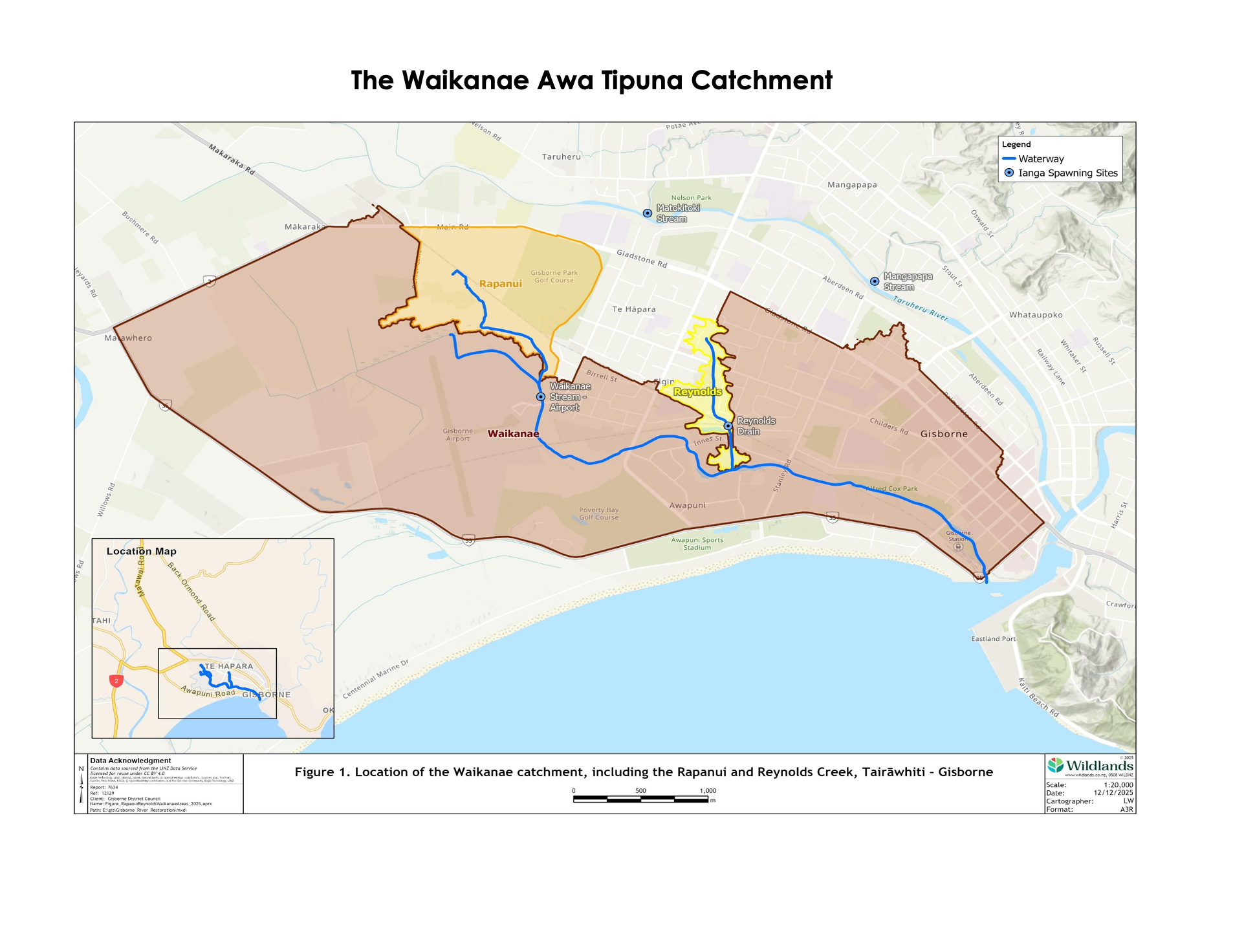
The Waikanae awa tīpuna extends approximately 7 kilometres and is contiguous with Te Moananui-a-Kiwa. Historically known as Te Wai o Hihārore, these lands and connected waterways form the ancestral domain of Ngā Uri o Ngāi Tāwhiri and Ngāi Tāwhiri, who carry an unbroken responsibility as kaitieki.
Central to this habitat was Te Toka ā Taiao, an expansive, flat papa rock structure stretching across the mouth of the river. It acted as a powerful ecological buffer absorbing storm surges, filtering coastal waters, and providing optimal shelter for juvenile kanae, tuna (eels), kūtai (mussels), kōkopu, kōura (freshwater crayfish), kahawai, and kingfish.
The decline of kanae populations is directly linked to colonial-era industrial development of Tūranganui ā Kiwa:
Destruction of Te Toka a Taiao (1877): was blasted with dynamite by the NZ Marine Department to enable shipping into the estuary, destroying the natural reef buffer, forever altering the ocean-river water mixing.
Estuarine Channelisation: Continuous filling and draining of salt marshes converted the dynamic delta into a straightened, artificial canal, stripping away vital intertidal feeding edges, habitats and ecologies
Water Quality & Sedimentation: Accelerated erosion from upstream land clearing filled natural holding pools with silt, while urban runoff and industrial discharges degraded water quality.
Passage Obstruction: Port modifications, weirs, and culverts severed contiguous migration pathways between ocean spawning grounds and upper river feeding zones.
Phase 1: Six key examples of Ngāi Tāwhiri mātauranga relevant to environmental guardianship were identified, researched, and codified:
Whakataukī as Environmental Indicators “Ngā tama korowhiti o Tangaroa”: Captures the physical identity of mature kanae leaping out of the water, signalling the exact departure window of migrating shoals and harvest readiness.
Atuatanga & Whakapapa Frameworks: Codifies the lineage of kanae as descendants of Tangaroa and tuakana (older siblings) to people, kawa and tikanga dictating strict duties of care and respectful resource management.
Mauri of Te Toka ā Taiao: Oral histories taken from kaumatua of Ngai Tāwhiri note, in 1300AD Kiwa sailed the waka Horouta around the bay before landing very near the Tūranganui estuary entrance, at Oneroa or Waikanae Beach. Kiwa intoned karakia and using his mana and ancient mātauranga he activated the mauri and wairua of these places. From Te Toka ā Taiao he activated the mauri (life-force) of the Waikanae and Tūranganui rivers, establishing the reef as an ecological anchor.
Tikanga of Sustainable Harvest & Rāhui: The use of rāhui as strict seasonal harvesting bans was monitored and enforced by the hapū Kaitieki. An example of enforcement was “muru”, the raiding and removal of personal properties, by the whole hapu. If the unwanted behaviours continued the offender would be put out of the hapū and muru could became “utu”, which at its worse, a life would be taken. The shorelines from Onepoto (Kaiti Beach) and along Oneroa were once patrolled by Tūmoremore, a hammer head shark, creating a level of protection for the vulnerable shoals of juvenile kanae as they entered the Tūranganui estuary.
Maramataka & Environmental Tohu: Traditional lunar metrics aligning tidal dynamics, lunar phases, and salinity shifts were used to guide sustainable human activity along the estuarine corridor.
Estuarine Hydrological Stratification Knowledge: Ancestral understanding of Waikanae (the brackish meeting zone where lighter fresh water flows over dense saltwater), recognized as essential for juvenile fish acclimatization.
RESTORATION METHODOLOGY: SIR MASON DURIE’S INTERFACE APPROACH
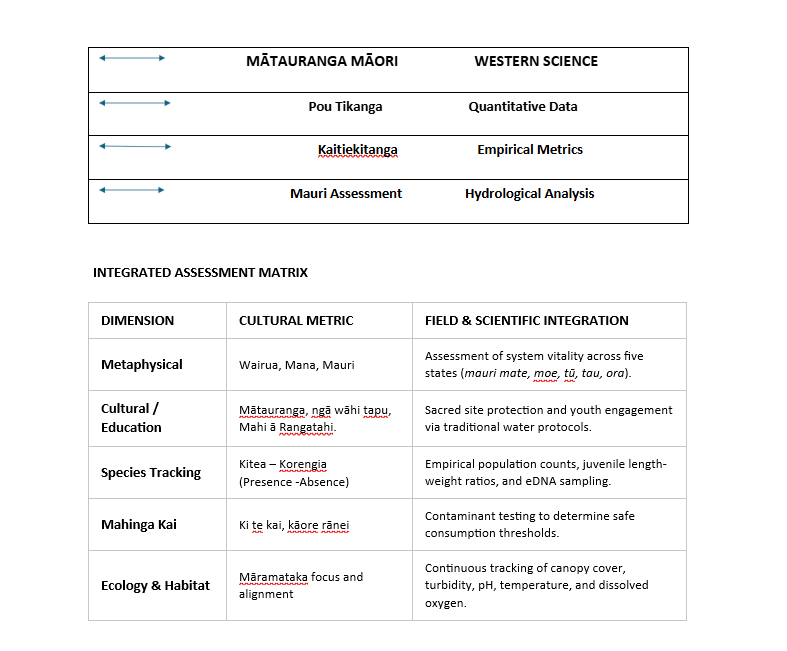
This project applied Sir Mason Durie’s Interface Approach, intentionally intersecting indigenous mātauranga with Western scientific methodologies to form a dual-benefit Cultural-Community Monitoring (CCM) framework.
WĀNANGA & PLAN INTEGRATION
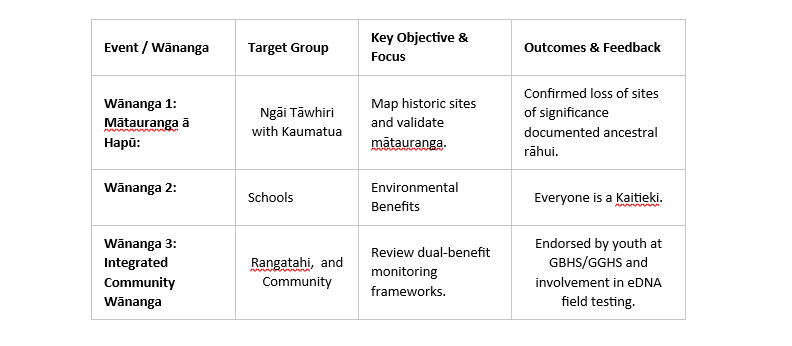
Three structured wānanga were hosted by NUoNT beginning with Ngai Tāwhiri Kāhui, at Te Kuri a Tuatai Marae on the 8th June 2026.
Key Plan Integrations
CCM Framework Adoption: Embedded the five-state Mauri Assessment Scale alongside physical water parameters into the baseline restoration plan.
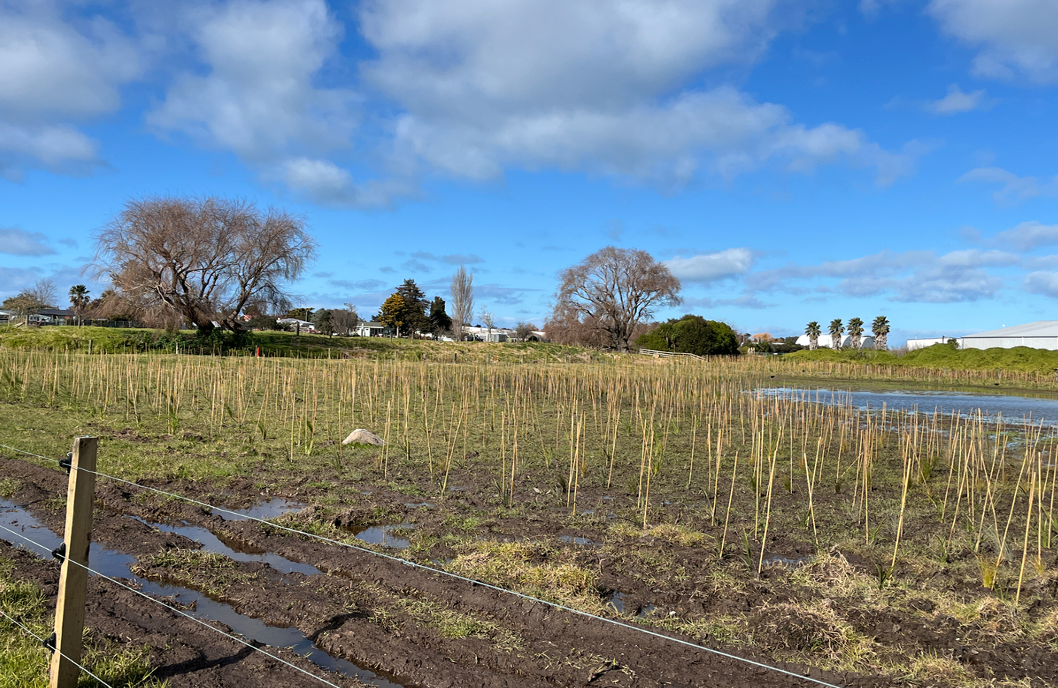
Cultural Sanctuary Zones: Designated the wetland margins near Te Toka ā Taiao for immediate habitat reconstruction and targeted native replanting.
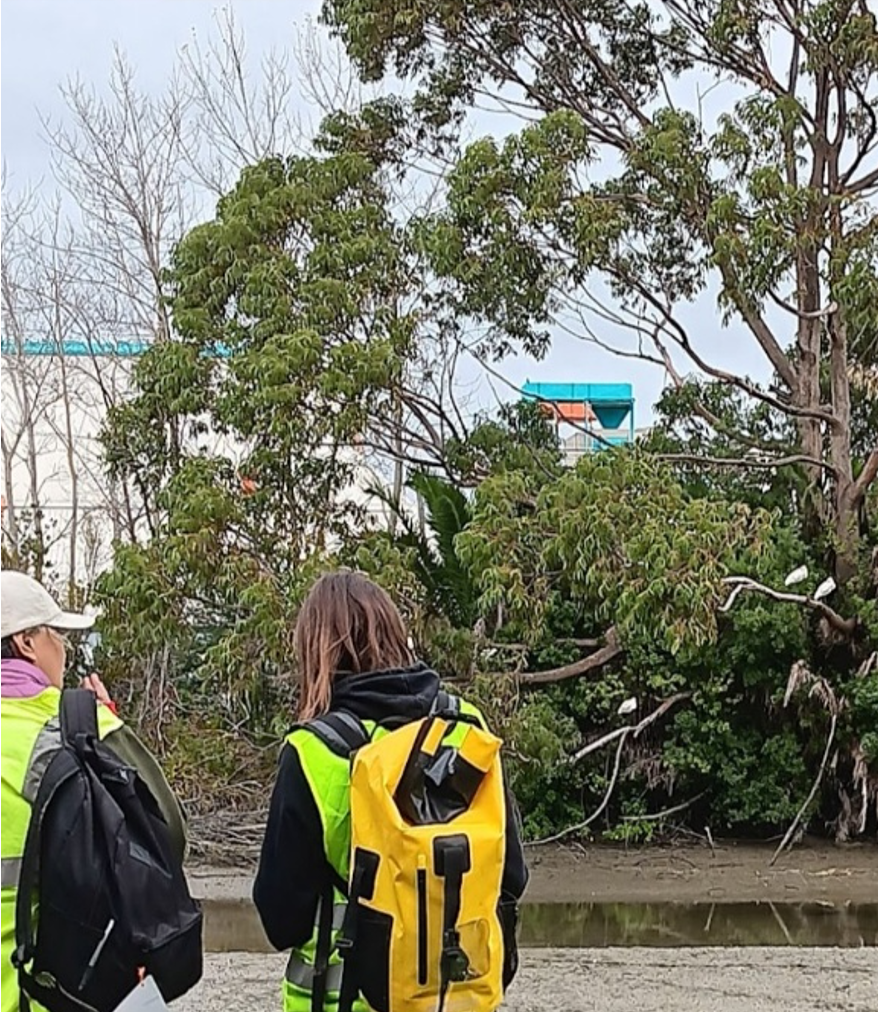
Rangatahi Field Program: Established formal pathways for local youth to conduct eDNA assays and visual monitoring using mobile reporting tools.
COMMUNITY IMPACT:
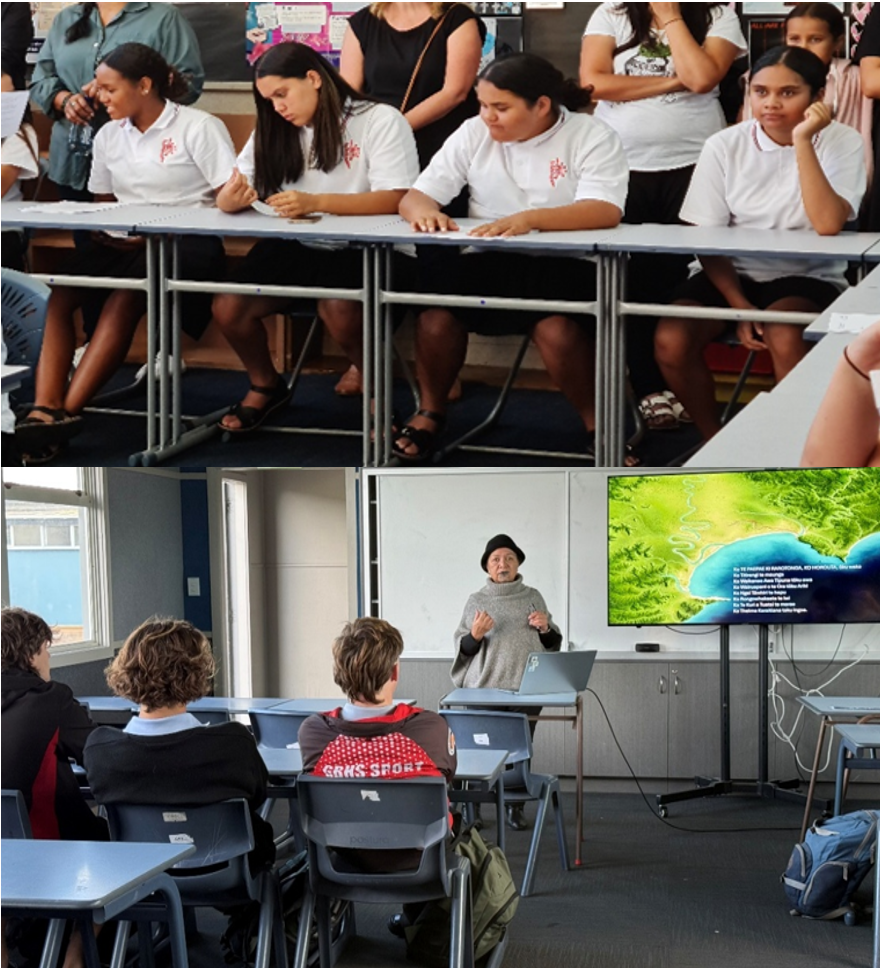
The integration of Ngāi Tāwhiri mātauranga specifically tailored to the Waikanae awa in conjunction with Western Science has established a robust platform for cross-sector learning spanning primary, intermediate, and secondary school levels. The sharing of traditional pūrākau has generated a significant demand for both historical and contemporary knowledge frameworks. Notably, there is growing community interest in the convergence of traditional mātauranga and modern Western science.
Adult and Commercial Engagement:
Ngā Uri o Ngāi Tāwhiri (NUoNT) has experienced escalating demand from adult demographics. Local businesses and visiting delegations are increasingly requesting structured wānanga located at the headwaters of the Waikanae River.
Language and Delivery Strategy:
The delivery of combined mātauranga and science curriculum using Te reo ake o Tūranga alongside English has consistently elicited highly favourable stakeholder feedback. Backed by this success, strategic planning is underway to develop future bilingual wānanga to further enrich the participant experience.
CONCLUSION
The completion of the Waikanae Awa Tīpuna Restoration Project confirms that combining Ngāi Tāwhiri mātauranga with western science creates a robust, community-led framework capable of guiding long-term ecological recovery.


Fostering the collective well-being of Tairāwhiti Catchments
